By RACBO South Sudan
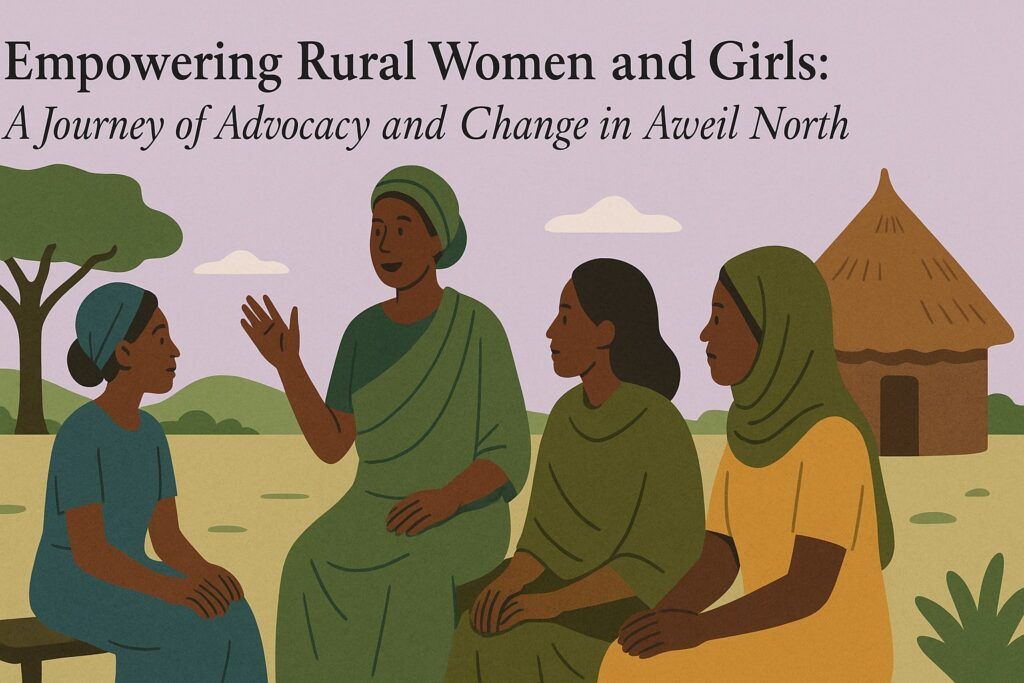
In the heart of Northern Bahr El Ghazal, something remarkable happened during the week of July 7th to 11th, 2025. The voices of rural women and girls—voices often ignored or silenced—rose in unity to challenge harmful norms, speak up about gender-based violence, and forge a path forward for peace, safety, and empowerment.
This wasn’t just another awareness campaign. It was a people-driven movement filled with energy, emotion, and a clear call for change. For us at RACBO South Sudan, it marked another important milestone in our mission to create safe, inclusive spaces for vulnerable communities—especially for women and girls navigating post-conflict realities.
What It Was All About
The campaign, titled “Women and Girls Led Advocacy Campaigns on Prevention & Response to SGBV Issues,” was rolled out in five Payams of Aweil North County. It formed part of a larger initiative funded by the European Union Humanitarian Aid (DG ECHO) and implemented through our partners at HealthNet TPO.
The broader project—“Integrated Emergency Health, Nutrition, Protection, and Response to Emerging Emergencies for Vulnerable Host and Returnee Populations in Northern Bahr El Ghazal”—aims to respond to the urgent needs of returnees and host communities, with women and girls at the center of the response.
Our theme for this advocacy week was:
“Enhancing Rural Women and Girls’ Participatory Approaches in Ending SGBV Related Practices in Vulnerable Host and Returnee Communities.”
And true to that theme, the women led. They didn’t just show up—they shaped the conversation.
The Power of Participation
At RACBO, we don’t believe in top-down solutions. We believe in the power of participation. That’s why every aspect of this campaign was designed to listen to and amplify the voices of the local women and girls who live these experiences every day.
In each Payam, we facilitated forums where women could speak openly—often for the first time—about issues like domestic abuse, early and forced marriages, sexual violence, and the stigma that often surrounds survivors. Girls bravely stepped forward to talk about pressure, silence, and the barriers they face in both homes and schools.
Some stories were heartbreaking, but none were hopeless. In fact, the most consistent message we heard was not one of despair—but of readiness. These women and girls are ready for change. All they need is the support to make it happen.
Why This Work Is So Urgent
Aweil North is home to a mix of host communities and returnees—families who fled war or disaster and are now trying to rebuild their lives. These are resilient people, but they face deep challenges. The scars of conflict, poverty, and displacement are everywhere, and gender-based violence (GBV) remains one of the most pressing, yet least reported, issues.
Too many survivors suffer in silence. There’s fear, shame, and a lack of services. And in rural areas, harmful practices like child marriage, denial of education, and gender discrimination are often normalized.
That’s why this campaign didn’t just talk about GBV—it equipped communities to prevent it and respond to it. We didn’t just raise awareness—we raised action.
Stories That Moved Us
Every day brought a new story that reminded us why this work matters. In one village, a young mother told us how she had once thought abuse was just part of marriage—until she attended one of our forums. Now she’s speaking to other women and encouraging them to seek help.
In another Payam, an elderly woman stood up and apologized to the younger generation. She admitted that her generation had unknowingly passed down practices that hurt women and girls. Her words brought tears—and applause.
These moments weren’t scripted. They were real, raw, and transformative.
Engaging Men and Boys
Ending SGBV isn’t just a “women’s issue.” That’s why our campaign included men and boys from the beginning. Community leaders, youth groups, and fathers were invited to every discussion.
We asked tough questions:
- What does it mean to be a man in this community?
- How can men become protectors and allies instead of perpetrators?
- What role can fathers play in ending early marriage and keeping girls in school?
The responses were powerful. Some men admitted they had never thought deeply about these issues. Others shared how their own attitudes had started to change. Many pledged to do better—for their daughters, their wives, their neighbors.
Building Local Solutions
At RACBO, we don’t believe in one-size-fits-all solutions. That’s why we worked closely with local leaders in each Payam to develop tailored responses. Together, we helped communities establish:
- Women-led protection committees
- Community referral pathways for survivors
- Information sessions on legal rights and health services
- Support networks for young girls and mothers
The most inspiring part? These initiatives were not imposed. They were owned by the communities themselves. That’s how we know they will last.
Challenges We Faced
Of course, the week wasn’t without its challenges. In some areas, initial resistance from traditional leaders made it difficult to start open conversations. In others, poor road access delayed our team’s arrival.
But persistence paid off. Once the elders and chiefs understood our goals—and once they saw the positive impact on their communities—they became some of our strongest advocates.
Another major challenge is the lack of support services for survivors. We are advocating strongly for increased investment in clinics, trained counselors, and safe spaces for women and girls. Awareness without action can be dangerous, and we are determined to close the gap.
What’s Next?
This campaign was just the beginning. In the months ahead, RACBO South Sudan will:
- Train women leaders in community advocacy and protection.
- Work with schools to promote gender equality and end stigma.
- Launch economic empowerment programs so women can gain financial independence.
- Engage policy-makers to ensure women’s rights are protected by law—and in practice.
We are also continuing to monitor and evaluate the impact of our interventions. Data collection and follow-up visits will help us track progress and respond to changing needs.
Words from the Ground
Here’s what some of the participants had to say:
“I thought I was the only one. Now I know we are many, and together, we are strong.” — Nyamal, 22, Returnee from Sudan
“I used to believe that disciplining my wife meant hitting her. I now understand that love and respect are what build a home.” — Peter, 40, Community Leader
“We’re ready to protect our girls. No more silence.” — Chief Madut, Gok Machar
A Note of Thanks
This campaign wouldn’t have been possible without our donors and partners. We are deeply grateful to the European Union Humanitarian Aid (DG ECHO) for funding this important work and to HealthNet TPO for their implementation leadership and technical guidance.
We also thank our local stakeholders—chiefs, women’s groups, youth leaders, volunteers—and most importantly, the brave women and girls who continue to rise above adversity and lead their communities forward.
Your courage is the foundation of a safer, stronger South Sudan.
Join Us
At RACBO South Sudan, we believe that change starts with the people. We are committed to walking alongside our communities, listening first, and acting with compassion and purpose.
We invite you to join us—whether you’re a policy-maker, a donor, a teacher, a mother, or a young girl dreaming of something better. Let’s create a South Sudan where women and girls are safe, respected, and free to thrive.
About RACBO South Sudan
Recovery and Access to Commonly Best Optimism (RACBO) is a South Sudanese nonprofit organization that works to empower communities through health, education, protection, peacebuilding, and humanitarian response. We believe in locally driven solutions and inclusive development that uplifts the most vulnerable.
Contact RACBO South Sudan
📧 Email: racbonet@gmail.com
📞 Phone: +211 923 601 020
🌐 Website: www.racbo.org
This article is part of RACBO’s 2025 community action series. Follow us for more stories from the field.
Leave a Reply